Foodhalls are no longer just a trend—they are a high-impact amenity for improving a property’s dwell time, leasing velocity and NOI
— Spencer Levy CBRE
The foodhall sector has come a long way in the past few years. Until fairly recently the multi offer food venue was generally either a bland and lacklustre ‘food court’ in a shopping centre dominated by QSR brands or a more temporary set up of stalls in a disused building generally termed a ‘food market’. Terminology aside what has emerged and flourished in recent years is a much more exciting and professionally run set up.
Foodhalls are no longer a fringe, ad hoc and amateur adjunct to the F&B sector. They have become an integral part of the industry with 20% year on year growth in the number of foodhalls in the UK with robust growth happening also in Europe. A recent report from Cushman & Wakefield says that there has been a 50% growth in foodhalls in Europe over the past 7 years with France, Germany and Italy leading the way. In a market where the F&B sector is facing serious challenges, foodhalls are bucking the trend.
Foodhalls have proven their commercial value, that they can be the element which attracts footfall onto high streets, into shopping centres and breathing life into new developments.
As the foodhall sector matures and becomes ever more competitive, the quality of the planning and design of foodhalls becomes ever more critical to enable landlords, vendors and operators make the most of the opportunities.
“Foodhalls are not about the food!
— Phil Colicchio Co-Founder, Colicchio Consulting
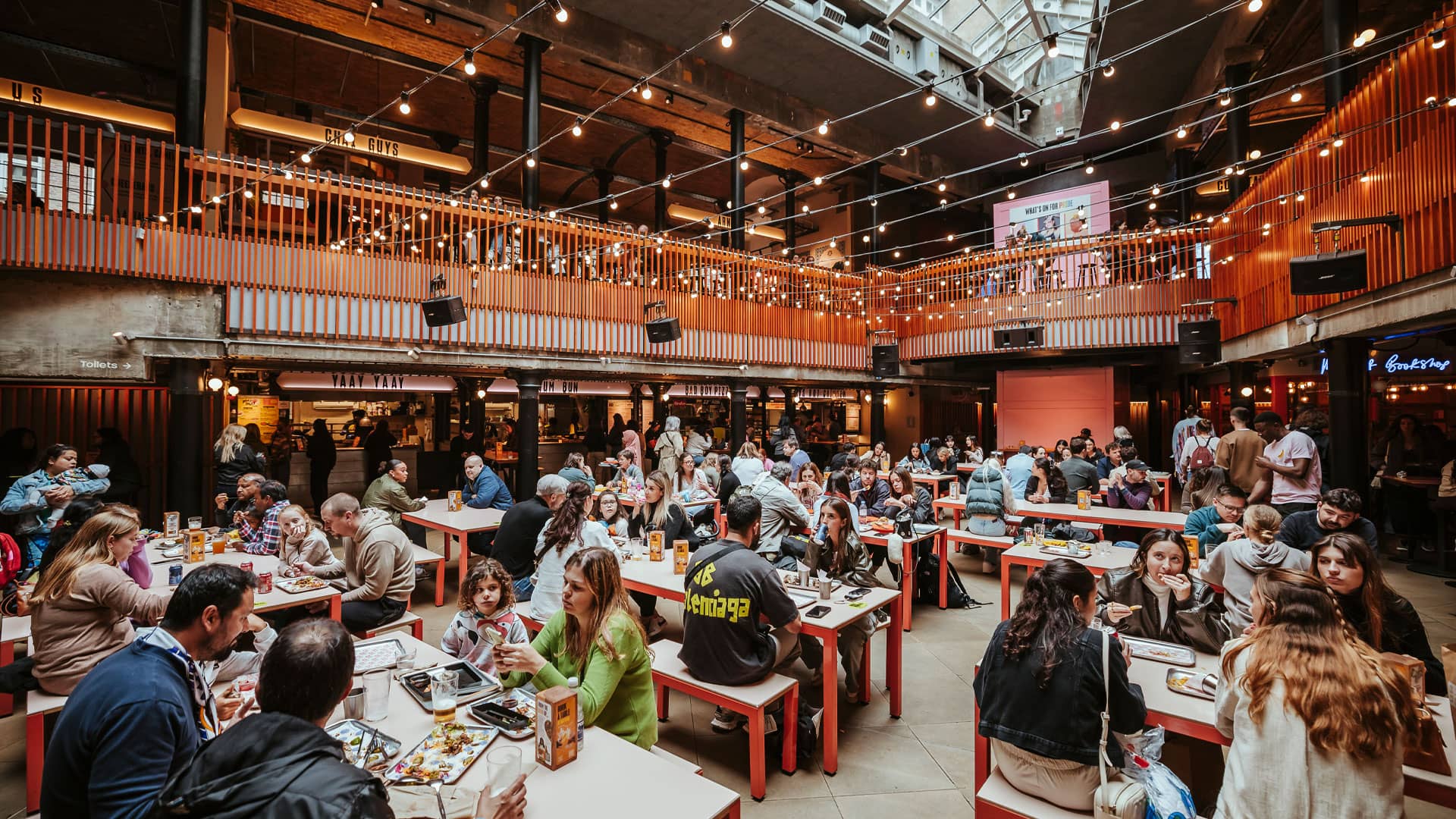
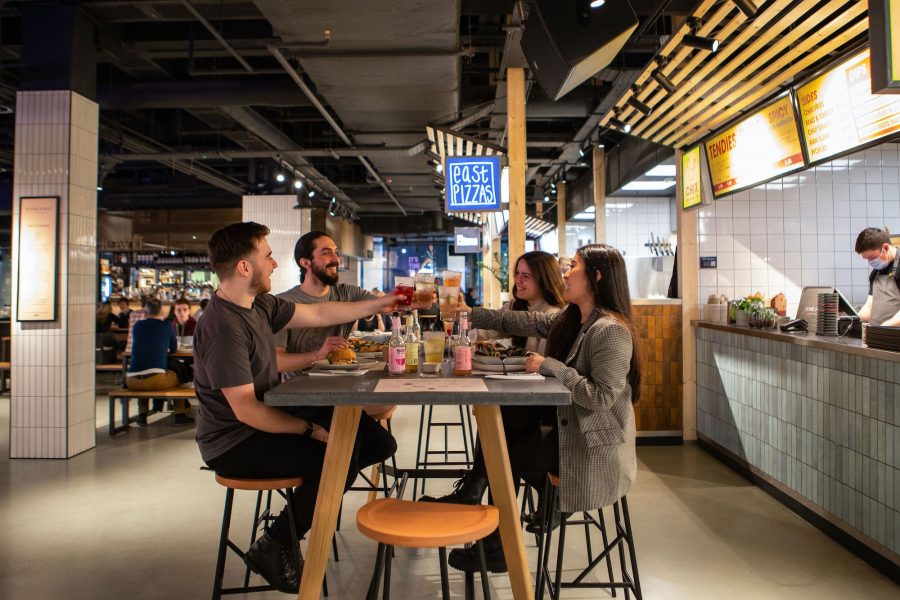
The statement above looks controversial at first though there is some truth to it. The food is of course an important component of a successful foodhall and should be of a high quality and a consistent standard. In many cases frankly there is better food available in individual restaurants (certainly in urban environments). It’s the variety, the convenience, the informality and the buzz that people find so appealing about foodhalls. Commercially they provide incredible flexibility for landlords and a relatively low risk opportunity for vendors thus encouraging innovation and enterprise.
When it comes to successful foodhalls the strength of the proposition and the quality of the design really is critical. The proposition and the design become the framework on which the other essential elements of the foodhall can be built around.
A strong proposition
A strong proposition can encompass a number of elements which could include:
First class design
Good design should:
Designing a sense of place
Bonnie & Wild in Edinburgh's St James Quarter has changed public perception of the food court
— Rosalind Erskine
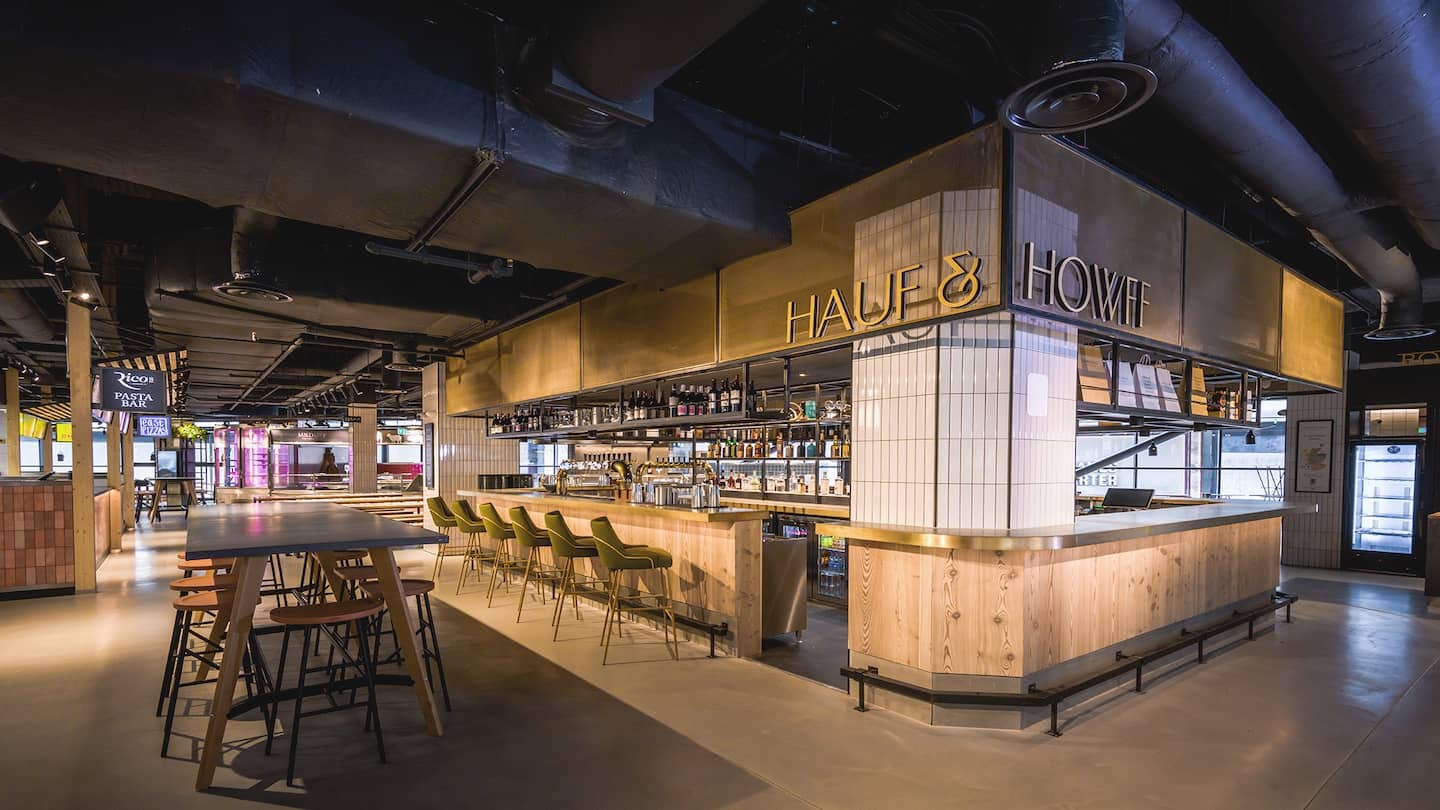
Increasingly people are seeking experiences over products and authenticity and localism. A recent JLL Global Consumer Experience Survey found that 80% of respondents believed that sense of place was an important component in F&B.
Sense of place can be present in the food offer and or in the way that the food hal is designed.
Bonnie and Wild in Edinburgh designed by us at Studio Duncalf is a great example of a foodhall that has centred its entire identity and proposition around its interpretation of Scottishness. Where, through the design and the food and drink offer, the foodhall presents as a showcase of modern Scotland complementing the elegance and sophistication of Edinburgh as the modern European city that it is.
The design concept was to present a modern interpretation of Scottishness, free from cliches and pastiche. To create a bright, elegant and flexible space using local materials like Scottish slate and larch.
An anchor for regeneration
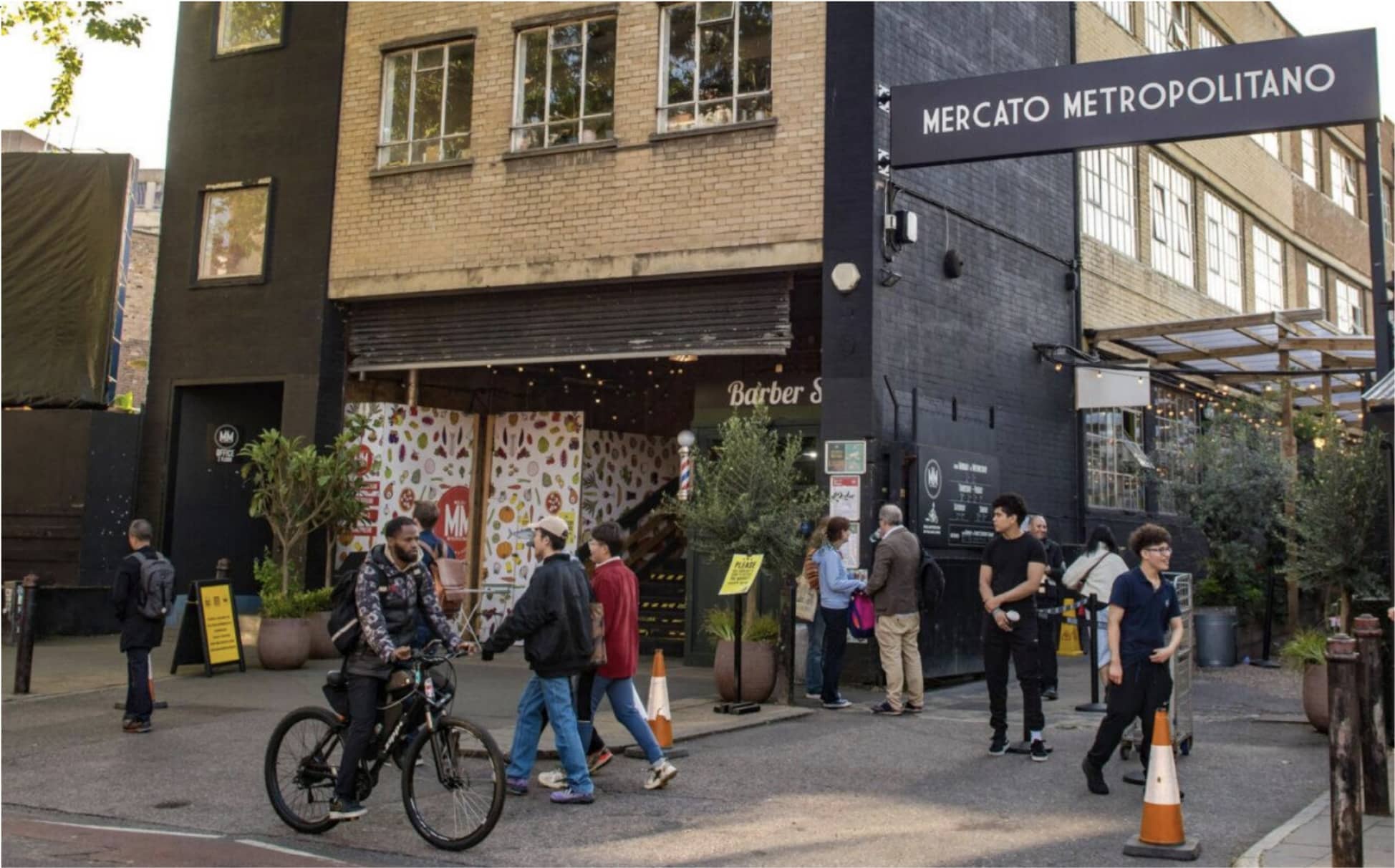
Foodhalls can play a role in breathing life into high streets and retail environments. They can also act as an important social glue in regeneration projects.
The original Mercato Metropolitano is a great example of this. Its location is a disused industrial complex at the centre of the rather unloved Elephant & Castle area of London. The location was in fact the site of a huge regeneration project. Mercato Metrropolitano generated large amounts of footfall which introduced new people into the area. The success of Mercato Metropolitano created a symbiotic relationship with the development. It is probably fair to say that the presence and success of Metcato played a really important role in improving the perception of the area from a rather neglected urban area to a thriving and fashionable urban village.
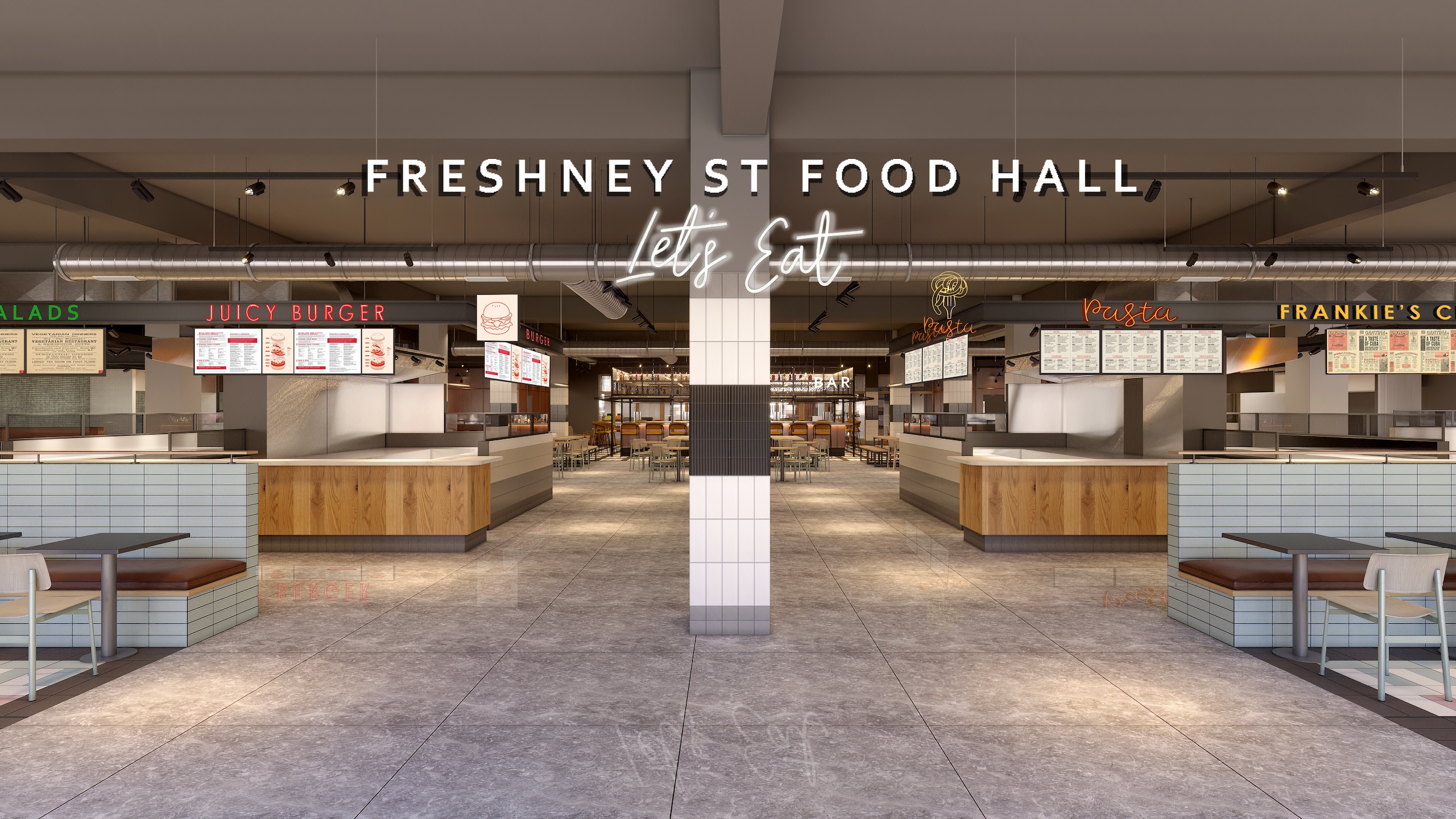
Other examples include the Cambridge Street Collective in Sheffield and Freshney Place in Grimbsy, a project that we have worked on. We were commissioned to design a foodhall and fresh food and retail market to provide a social, community space and amenities at the heart of the scheme.
The importance of good space planning
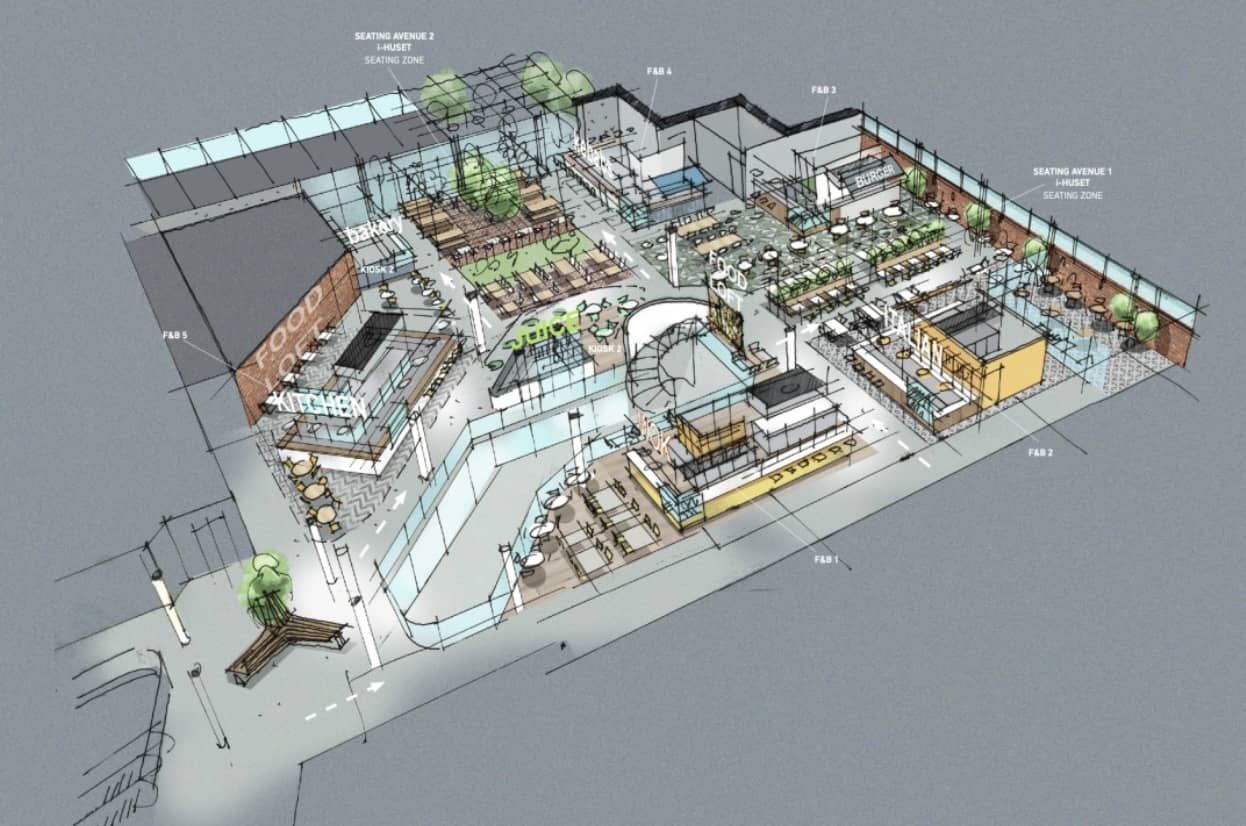
The aesthetic elements of food hall design are a hugely important factor. It is however critical not to underestimate the importance of diligent and thorough spatial planning. Space planning helps create easy to navigate, easy to use and efficient foodhalls for guests and operators alike.. Good design can improve dwell time which can be a driver of increased revenue. Here are just a few of the aspects that we consider at the planning phase of a foodhall design project.
Spatial analysis and planning
From arrival to the entry into the foodhall space, it’s important that the guest can get a quick understanding of the variety of what’s on offer and how the space works without feeling overwhelmed.
Once in the space, guests should be able to easily understand where they can sit and feel that there is a sufficient variety of seating options to suit different guest on different missions.
The ordering process should be clear and easy to understand. Even at busy times, guests should feel reassured that queues are well managed and that wait times are reasonable.
Spaces that work well for guests and operators
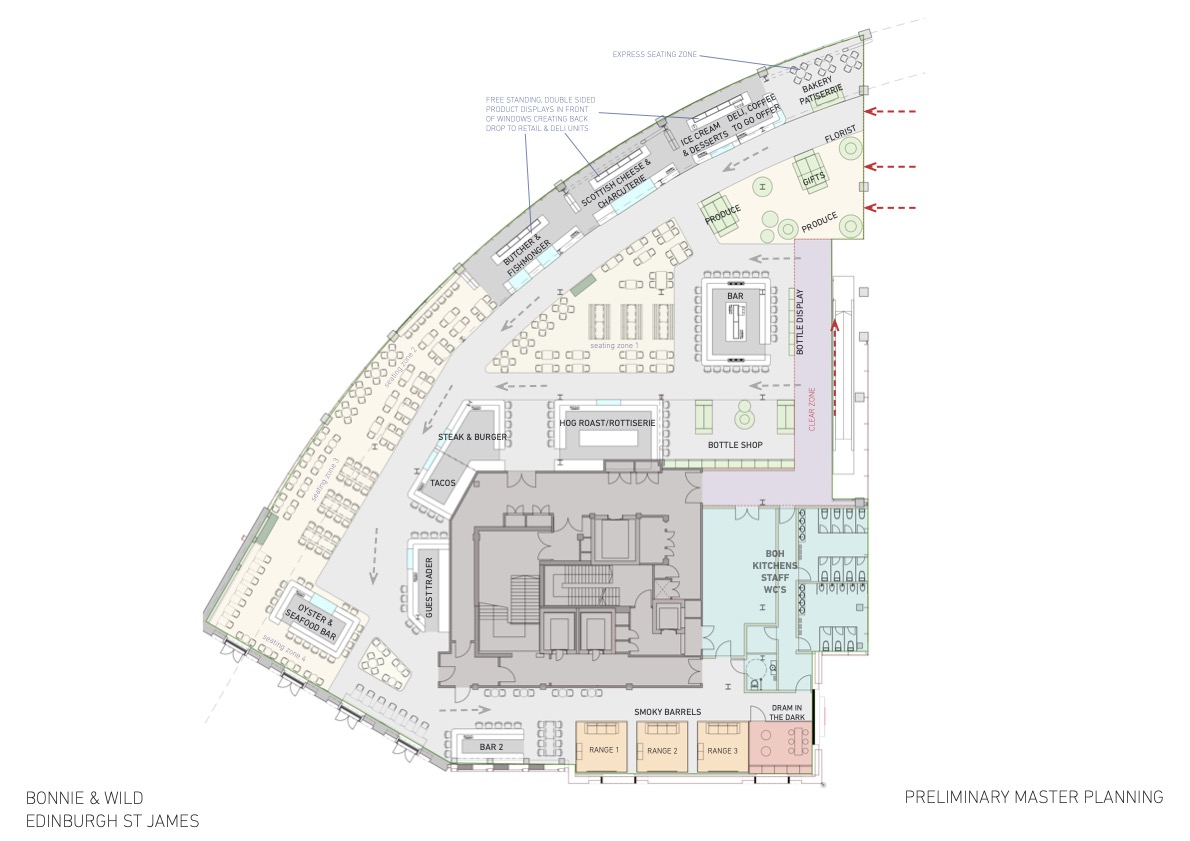
Circulation and customer flow
Zoning
It is important to analyse how to create a variety of zones in the space serving different functions with different tempos and different moods. How we can plan the space to suit different types of users? This could be creating booths for groups and families, larger sharing tables, quieter spaces for couples and visitors wishing for a more tranquil setting.
Visibility
Spaces that work well for guests and operators
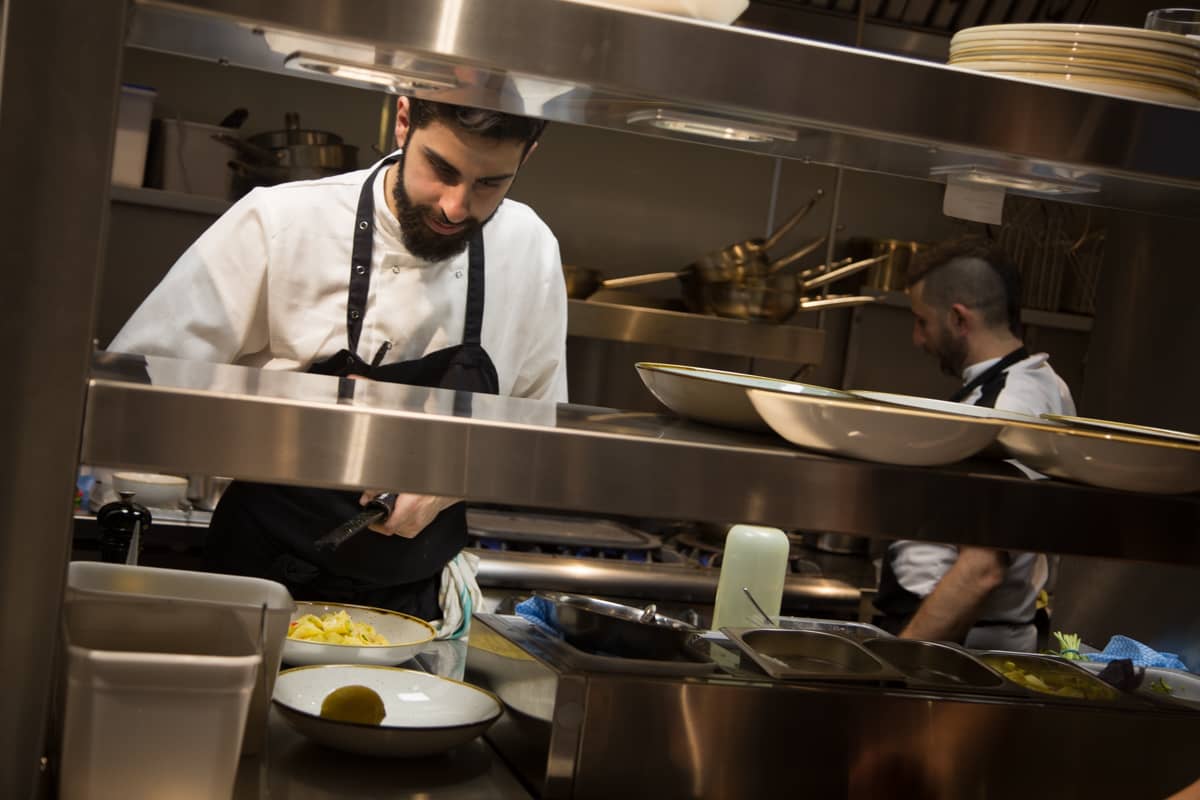
Not only to foodhall spaces have to work well for guests, they need also to work well from an operational perspective. Functional but essential elements to consider when designing foodhall spaces include:
Technical aspects - Services
Operational considerations
Customer comfort and convenience
Furniture, finishes etc
A framework for memorable experiences

Visual interest and excitement
Ultimately the navigation and operation of the foodhall should be invisible and intuitive as far as the guests are concerned. What they are most likely to notice are the aesthetic elements of the design.
First impressions are critical and the foodhall should convey energy, quality and identity.
Visual interest is what draws people into the space and encourages exploration and a sense of anticipation.
Create a focal point
A bar is a great place to create a focal point for a foodhal, not to mention a great driver of revenue.
A well designed bar provides a visual landmark and acts as a social hub. In addition to the central bar, Bonnie and Wild has two further bars in the space distributing the energy around the space.
A good bar has great commercial benefits in accentuating the spirit of conviviality, encouraging dwell time and capturing incremental spend.
Create a sense of theatre
Food units can be designed to accentuate a sense of theatre. Open kitchens where certain elements of the food preparation are visible or at least the movement and action in the kitchen is visible to guests can be engaging for guests and also create a degree of authenticity and a reassurance of the freshness and provenance of the produce.
This can also help differentiate individual vendors and generally contribute to the overall vibrance of the foodhall.
A framework for memorable experiences
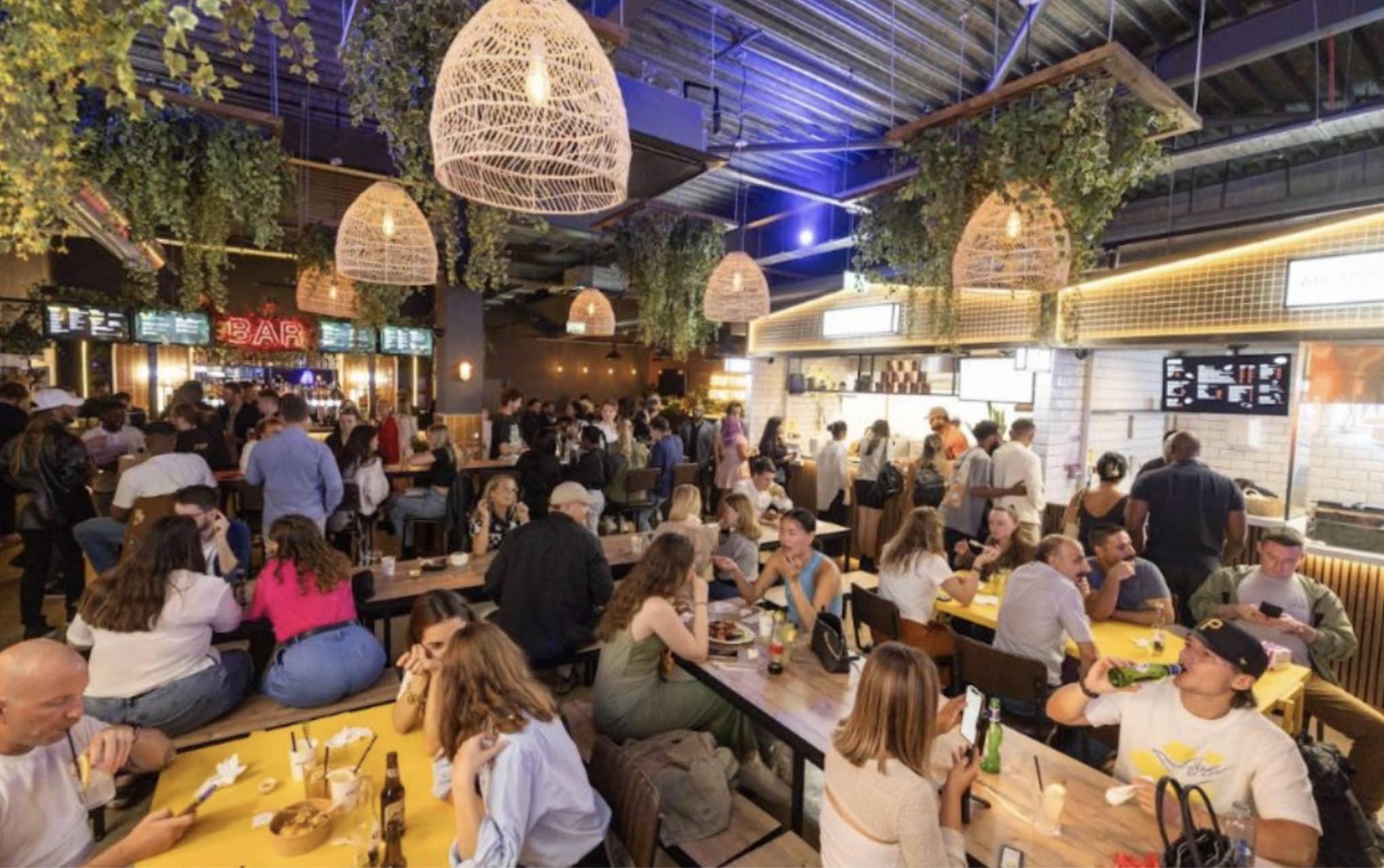
Designing spaces that can support a programme of activities
A key challenge is to encourage repeat visits. To make your foodhall a place where there is always something interesting happening. In our experience this can be achieved in a few ways.
Rotating food offers
One of the key advantages of the foodhall model is that leases tend to be shorter than bricks and mortar restaurants. This makes it easier for exciting and new vendors to replace ones which are not performing. In addition, specific areas or units can be dedicated to a program of rotating food offers to keep things interesting and fresh for regular visitors.
A programme of events
This could include:
At Bonnie & Wild in Edinburgh, we designed in a flexible space which can be used as a private dining room and an events space. It’s used from everything from corporate product launches to private parties
Enhancing commercial uplift throughout the day
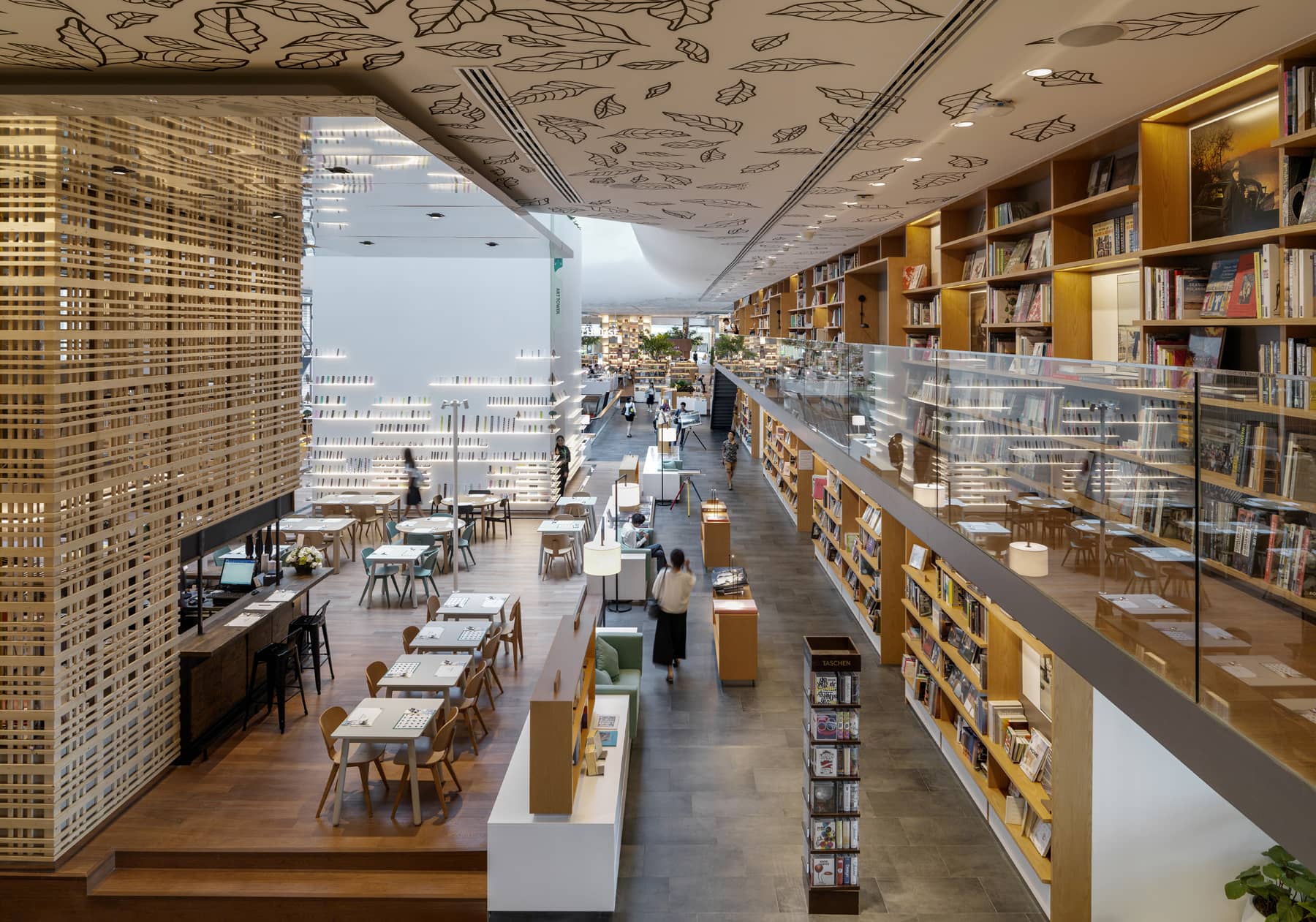
Designing for peaks, troughs and activating the space through all day parts
A key commercial challenge for food halls is activating the space outside the key peak periods. As we know, the busy times are in the evening period and at lunch times. Quieter periods are early in the day pre lunch and post lunch.
Designing flexibility into food halls is a commercially sound strategy. There are various ways in which we have designed food hall spaces to enhance activity and revenue.
Efficiency and Convenience
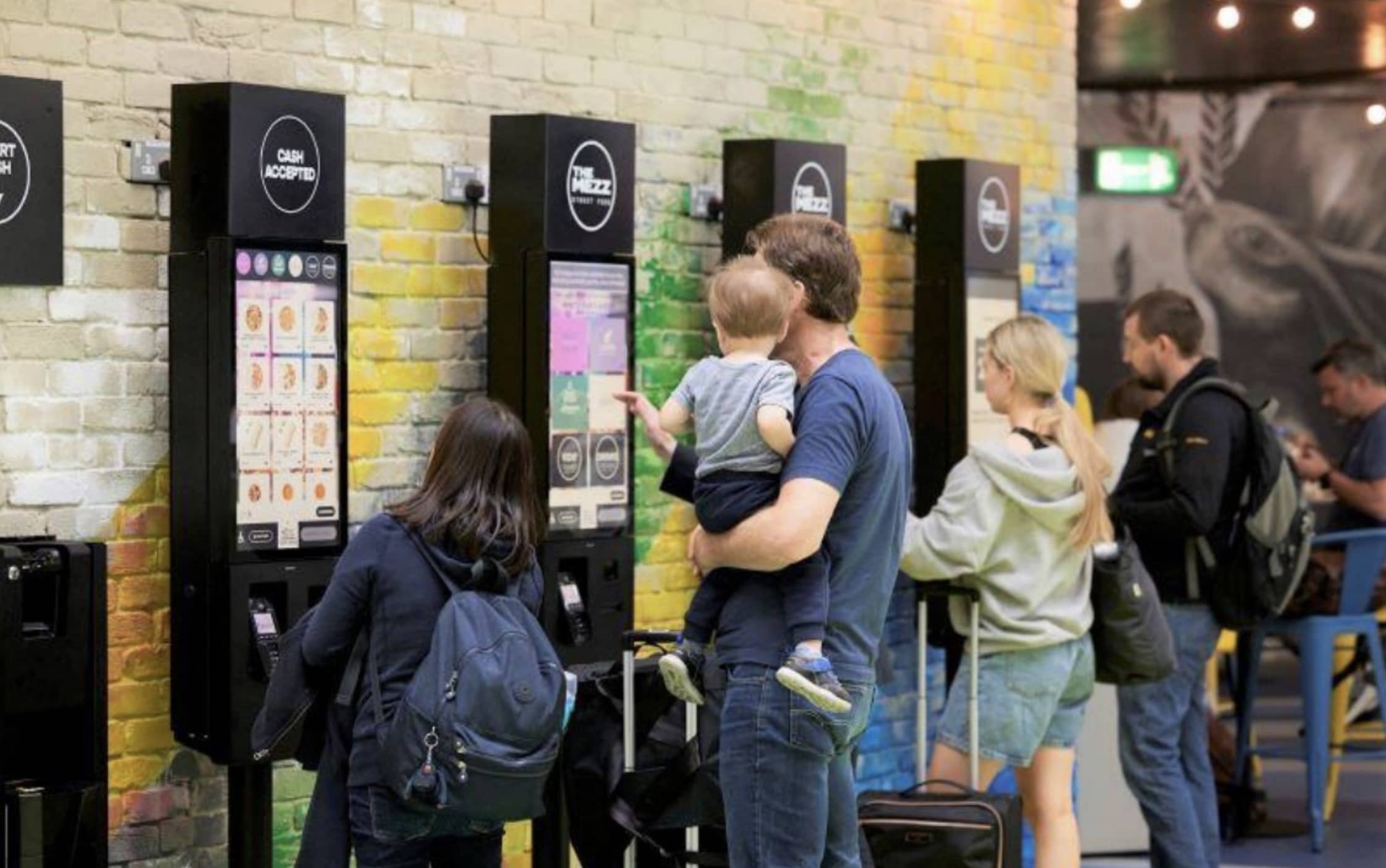
The role of technology is vital in foodhall spaces. Technology can enhance the efficiency of the service, reduce waiting times, provide information on producers and encourage loyalty.
Digital order kiosks
Digital order screens can be used to allow customers to order direct to the kitchen helping to cut time and improve efficiency. Digital order screens can also be helpful in providing information about the offer without customers having to wait to ask staff.
Order at table
Order at table through a mobile app has many of the benefits of order kiosks but customers can be provided with more information on the provenance of the food or the brand story.
Mobile app
Much of this technology could be accessible via a mobile app where in addition to facilitating the order process, loyalty etc, the app could be used to enhance the customer experience by:
Providing more information on specific offers at the foodhall - ‘meet the trader’ or ‘meet the producer’ providing interesting and entertaining content profiling them or their products.
Technology can be used to facilitate upsell and brand loyalty, enhancing commercial opportunities.
Brand loyalty, brand champions

Don’t forget Gen Z and Gen Alpha!
Gen Alpha born from 2010 onward are the true digital natives, they are the first generation to have been born after the launch of Google. This means that they expect and demand technology to enhance their experiences in all areas of their lives, this includes food.
They follow TikTok trends and influencer and love to express themselves and share their thoughts and values using social media. They don’t always respond to situations being curated for them, they curate their own experiences. For them, food centric meeting places can become a social hub.
Through the use of social media, young people can become champions for your foodhall augmenting your marketing and outreach efforts.